Peptide Shampoo: Ingredients, Evidence, and How to Use It
Peptide shampoo explained: what it is, whether it helps hair growth, how Blueprint Peptide Shampoo fits into a hair protocol, and what evidence actually supports the ingredients.
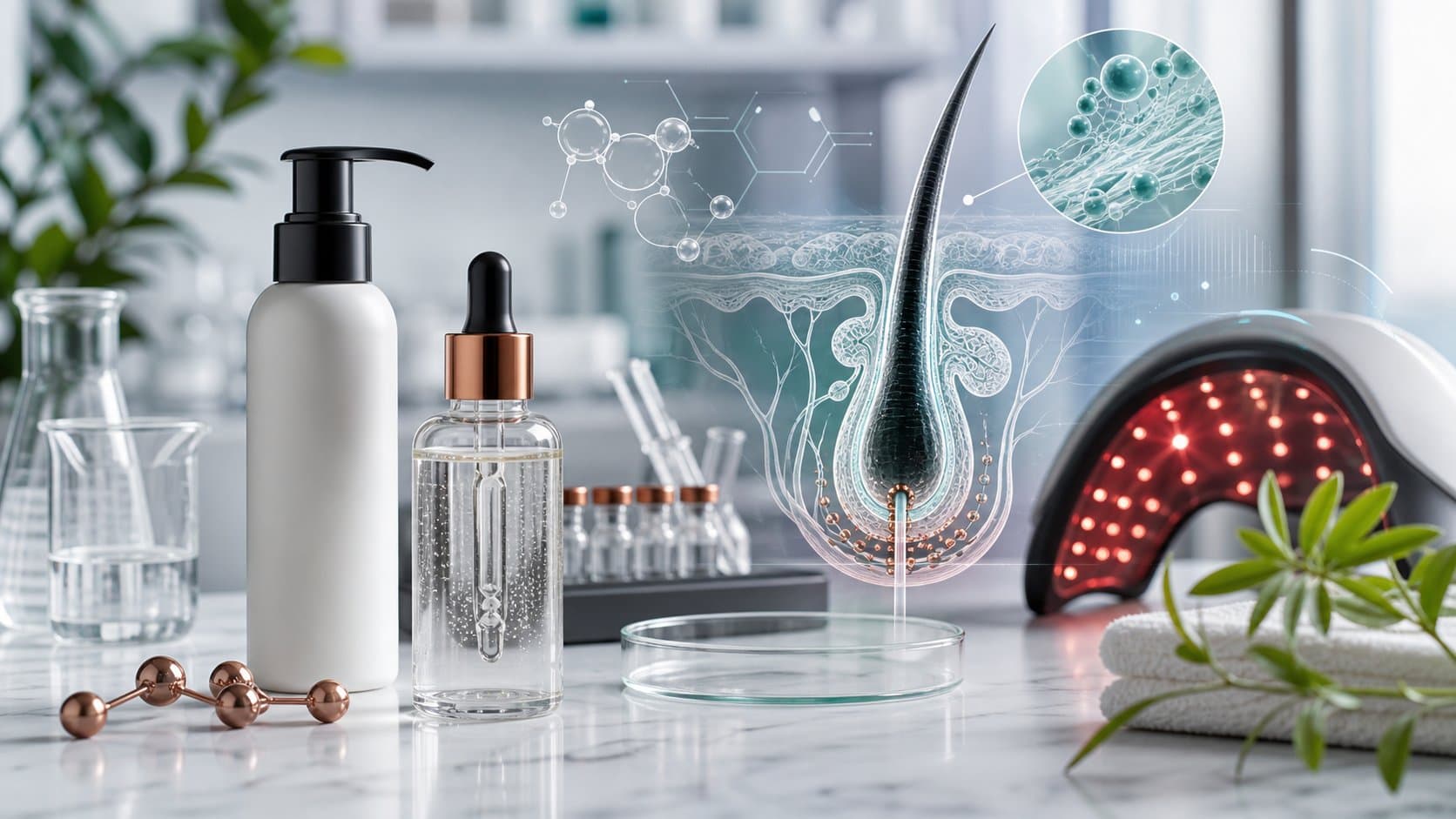
Peptide shampoo is a scalp-care shampoo that adds peptide or peptide-adjacent ingredients to a cleansing formula. The idea is simple: clean the scalp, reduce buildup, and expose the follicle environment to ingredients such as copper peptides, biomimetic growth-factor-style peptides, caffeine, adenosine, panthenol, niacinamide, and amino acids.
The honest read: peptide shampoo can be a useful scalp prep step, but it is not the same as minoxidil, finasteride, a leave-on peptide serum, or a medical hair-loss treatment. Because shampoo is rinsed off, contact time and ingredient delivery are the biggest limits.
For a full routine, see the Bryan Johnson hair protocol. For the broader ingredient ranking, see best peptides for hair growth.
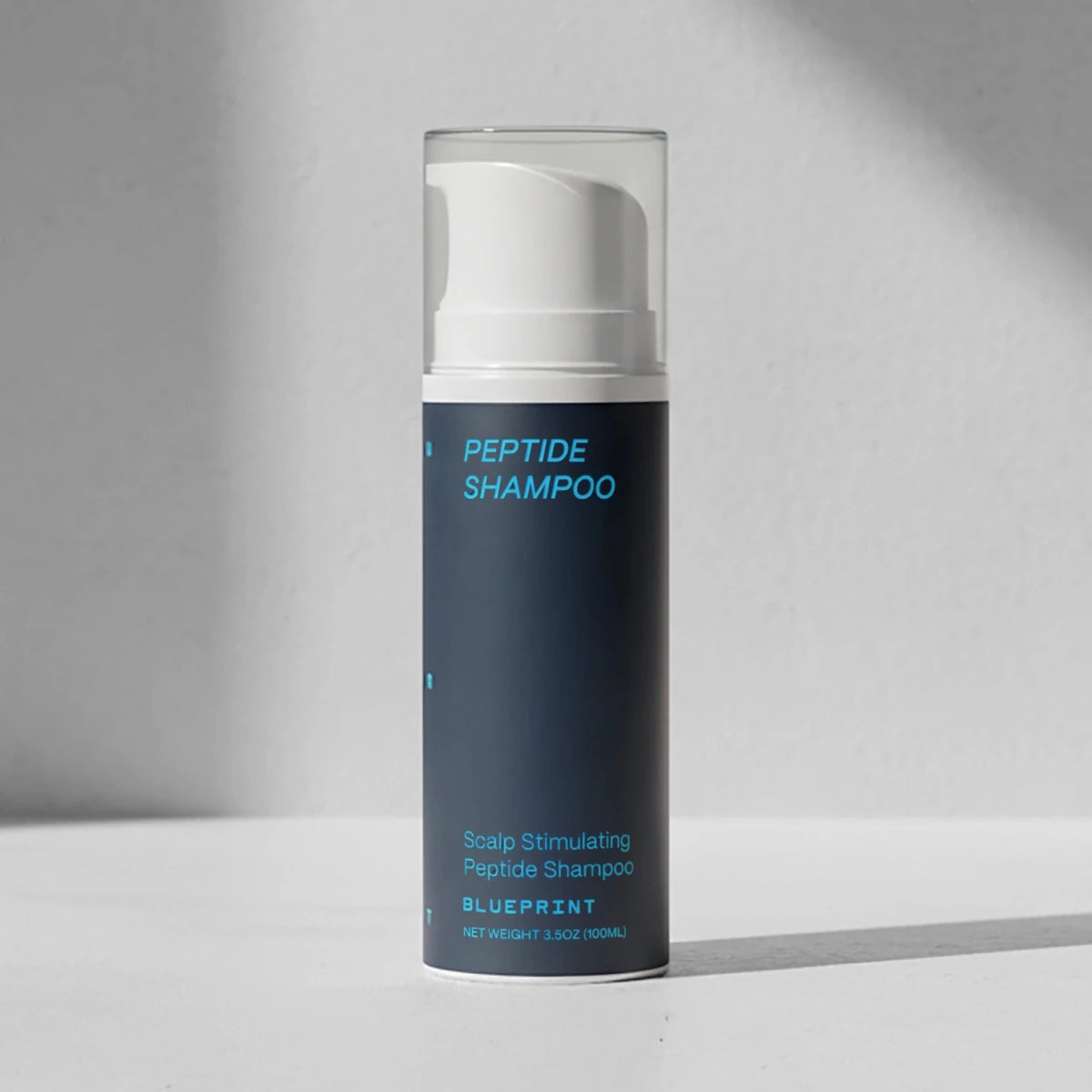
Peptide shampoo pick
Blueprint Peptide Shampoo
$25 offBlueprint Peptide Shampoo is the rinse-off shampoo step in Bryan Johnson's hair protocol. It combines gentle surfactants with biomimetic peptides, copper tripeptide-1, caffeine, adenosine, niacinamide, panthenol, glycerin, silk amino acids, menthol, curcumin, and antioxidant support.
View peptide shampoo| Best use | Evidence read |
|---|---|
| Scalp prep before a leave-on serum or broader hair protocol. | Ingredient rationale is stronger than shampoo-specific hair-regrowth proof. |
| People who want a gentle, sulfate-free shampoo with peptide-style scalp actives. | Rinse-off contact time means expectations should stay conservative. |
| Pairing with minoxidil, laser therapy, or a leave-on peptide serum when appropriate. | Medical and leave-on options have stronger logic for sustained follicle exposure. |
What Is Peptide Shampoo?
Peptide shampoo is not one standard formula. Search results are mostly product pages, ingredient explainers, and hair-growth claims. The common pattern is a shampoo that combines:
| Ingredient type | What it is supposed to do | Practical read |
|---|---|---|
| Peptides | Support scalp conditioning, repair-signaling cosmetics, or fuller-looking hair claims. | Evidence is usually ingredient-level, not strong shampoo outcome data. |
| Copper tripeptide-1 / GHK-Cu style peptides | Cosmetic scalp support, repair signaling, antioxidant and follicle-environment rationale. | Interesting ex vivo and skin-repair data; not a minoxidil replacement. |
| Adenosine | Hair-cycle support and thick-hair-ratio signal in topical studies. | Better human topical evidence than most cosmetic peptides. |
| Caffeine | Scalp active used in hair-loss formulas and follicle-penetration research. | Leave-on caffeine data is more meaningful than shampoo-only claims. |
| Niacinamide, panthenol, glycerin, amino acids | Scalp barrier, hydration, conditioning, shine, and hair feel. | Useful support ingredients, but not direct hair-regrowth drugs. |
That matches the intent behind most searches for "peptide shampoo": people want to know what it does, whether it grows hair, which ingredients matter, and whether a product such as Blueprint Peptide Shampoo is worth adding to a routine.
Does Peptide Shampoo Help Hair Growth?
It may help the scalp environment and hair feel, but it should not be framed as a proven standalone hair-regrowth treatment.
The main issue is rinse-off exposure. A shampoo might sit on the scalp for one to three minutes. A leave-on serum can sit there for hours. For ingredients that need follicle contact, delivery and contact time matter.
The most defensible claims are:
- Peptide shampoo can cleanse the scalp without harsh stripping when the surfactant system is gentle.
- It can deliver short-contact exposure to peptides, caffeine, adenosine, and scalp-conditioning ingredients.
- It can pair well with a leave-on serum, minoxidil, or laser therapy.
- It should not be treated as equivalent to minoxidil, finasteride, dutasteride, or clinician-directed hair-loss treatment.
Blueprint Peptide Shampoo Ingredients
Blueprint's formula is more interesting than a basic "peptide shampoo" because it stacks multiple ingredient categories instead of relying on one peptide claim. The important groups are:
| Group | Ingredients | Role |
|---|---|---|
| Gentle cleansers | Lauryl glucoside, decyl glucoside, coco-glucoside, disodium lauryl sulfosuccinate, lauramidopropyl betaine | Clean oil, sweat, styling buildup, and scalp residue without relying on harsher sulfate surfactants. |
| Biomimetic peptides | sh-Oligopeptide-1, sh-Oligopeptide-4, sh-Polypeptide-1, sh-Polypeptide-7, sh-Polypeptide-9, sh-Polypeptide-11, sh-Polypeptide-71 | Cosmetic scalp-conditioning and growth-factor-style signaling story. Finished-product hair-growth proof is limited. |
| Copper peptide | Copper tripeptide-1 | Scalp repair and follicle-environment rationale; hair evidence is mostly ingredient-level. |
| Hair-cycle adjuncts | Adenosine, caffeine | Better topical hair-growth evidence than most cosmetic peptides, though shampoo contact time is still a limitation. |
| Barrier and conditioning support | Niacinamide, panthenol, glycerin, betaine, silk amino acids, arginine | Hydration, scalp comfort, conditioning, shine, and hair-feel support. |
| Antioxidant and sensory ingredients | Curcumin, tetrahydrocurcumin, 3-O-ethyl ascorbic acid, menthol, mint oil | Antioxidant positioning and cooling scalp feel. Menthol/mint can irritate sensitive scalps. |
How to Use Peptide Shampoo
Use it like a treatment shampoo, not like a quick lather-and-rinse cleanser.
- Wet hair and scalp fully.
- Apply to the scalp, not just the hair length.
- Massage gently with fingertips.
- Leave on for about two minutes unless the product label says otherwise.
- Rinse thoroughly.
- Follow with a leave-on scalp serum or separate hair-loss treatment only when that product fits your routine.
If your scalp is sensitive, start a few times per week and watch for itching, burning, flakes, redness, or increased irritation. Menthol, mint oil, botanical fragrance components, exfoliating acids, and some preservatives can bother reactive scalps.
Peptide Shampoo vs Peptide Serum
If you are choosing between a peptide shampoo and a peptide serum, the serum has the stronger delivery logic because it is leave-on.
| Product | Strength | Limit |
|---|---|---|
| Peptide shampoo | Cleans scalp, removes buildup, can expose the scalp to actives briefly. | Rinsed off quickly; weaker for sustained follicle exposure. |
| Peptide serum | Leave-on exposure, stronger rationale for peptides, caffeine, adenosine, and scalp actives. | Can feel sticky or irritate if overused; still not a proven replacement for medical therapy. |
| Minoxidil | Better human evidence for androgenetic alopecia than peptide cosmetics. | Can irritate, shed early, or be unsuitable for some users; use according to label or clinician guidance. |
Who It Makes Sense For
Peptide shampoo makes the most sense if:
- you want a gentle shampoo that fits a scalp-health routine;
- you already use a leave-on hair serum and want a matching prep step;
- you are using minoxidil or laser therapy and want the scalp cleaner before treatment;
- you understand it is an adjunct, not the core hair-loss treatment.
It makes less sense if you expect shampoo alone to reverse androgenetic alopecia, recession, or long-term thinning.
Best Peptide Shampoo Criteria
When comparing peptide shampoos, ignore the loudest marketing claim and check these basics:
| Criterion | What to look for |
|---|---|
| Clear ingredient list | The peptide names and support actives should be visible, not hidden behind a vague complex. |
| Gentle cleanser base | A thinning-hair shampoo should not leave the scalp feeling stripped or inflamed. |
| Leave-on pairing | A shampoo makes more sense when paired with a leave-on serum or proven treatment layer. |
| Reasonable claims | Look for scalp support and fuller-looking hair language, not guaranteed regrowth claims. |
| Evidence-aware formula | Adenosine, caffeine, niacinamide, panthenol, and copper peptide are more interesting than peptide buzzwords alone. |
FAQ
What is peptide shampoo?
Peptide shampoo is a shampoo that includes peptides or peptide-like cosmetic actives alongside cleansers and scalp-support ingredients. It is usually marketed for scalp health, hair strength, fuller-looking hair, or hair-growth support.
Does peptide shampoo regrow hair?
There is not enough evidence to treat peptide shampoo as a standalone regrowth treatment. It can support scalp care, but minoxidil, finasteride, dutasteride, and laser therapy have stronger human evidence for androgenetic alopecia.
Is Blueprint Peptide Shampoo worth it?
Blueprint Peptide Shampoo is most reasonable as a scalp-prep step in the larger Blueprint hair protocol. The formula is ingredient-rich, but the rinse-off format means expectations should be lower than for a leave-on serum.
How often should I use peptide shampoo?
Follow the product label. If your scalp is sensitive, start a few times per week and adjust based on dryness, itching, oil, flakes, and irritation.
Is peptide shampoo better than minoxidil?
No. Minoxidil has stronger human evidence for hair loss. Peptide shampoo is better viewed as a cosmetic scalp-support adjunct.
Should I use peptide shampoo or peptide serum?
If you only choose one peptide-style product, a leave-on serum usually has the stronger logic because it stays on the scalp. Shampoo can still make sense as the cleansing and prep step.
References
Blueprint. Peptide Shampoo product page.
Pyo HK, et al. The effect of tripeptide-copper complex on human hair growth in vitro.
Dhurat R, et al. Caffeine-based topical liquid 0.2% versus minoxidil 5% solution in male androgenetic alopecia.
Olsen EA, et al. 5% topical minoxidil versus 2% minoxidil and placebo in men with androgenetic alopecia.